LuxuryCarMagazine En Luxury Car Review and News
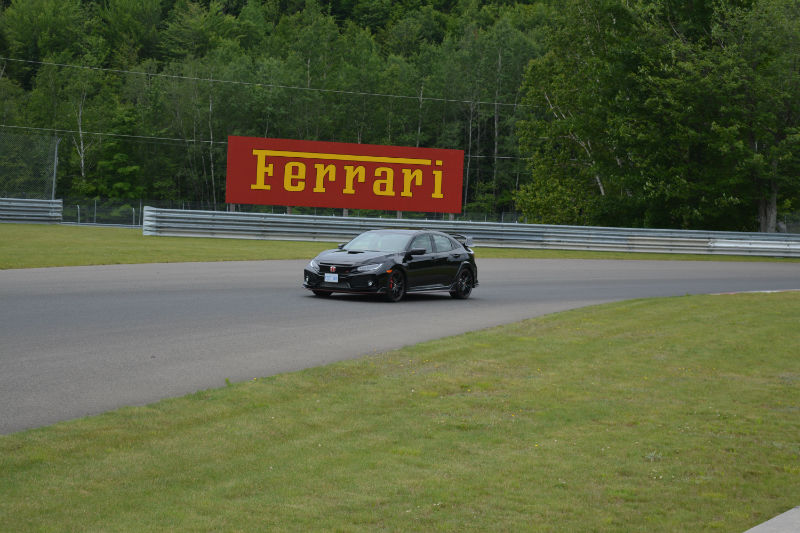
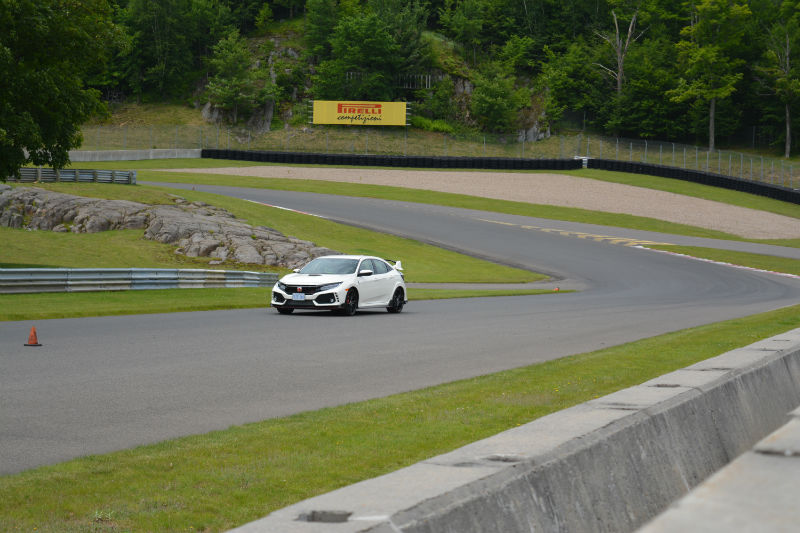
Where do you begin when facing the daunting task of evaluating what is arguably the most anticipated sports car of 2017? When Honda called upon us to do exactly that, they’d already made the decision for us and it was going to happen at the Circuit Mont-Tremblant, a world-class racetrack 90 minutes north of Montreal.

There’s little reason to ask ourselves why they decided to proceed this way. The new Honda Civic Type R is the fastest production FWD car to have ever lapped the famed and challenging Nürburgring Nordschleife. Its time of 7:43.80 bested the most hardcore VW GTI ever, the 2016 Clubsport S, by 5.4 seconds and, interestingly enough, the previous generation 2014 Civic Type R whose best time was of 7:50.63. How was this achieved?
It’s a simple, time-honoured recipe of more power, less weight (if only a little), and a better chassis and body setup. As far as girth is concerned, Honda cut just under 40kg (80 lbs.) from the old car but that’s barely the tip of the iceberg.
Wings
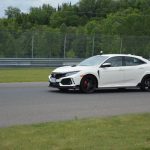
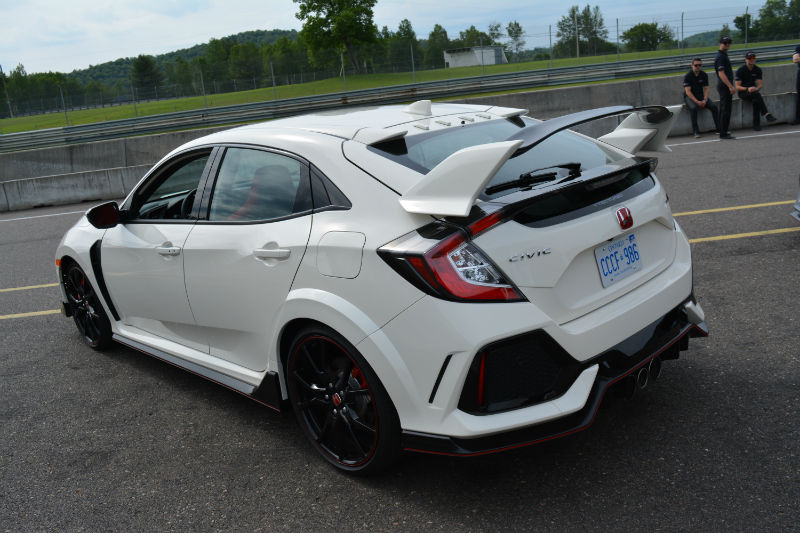
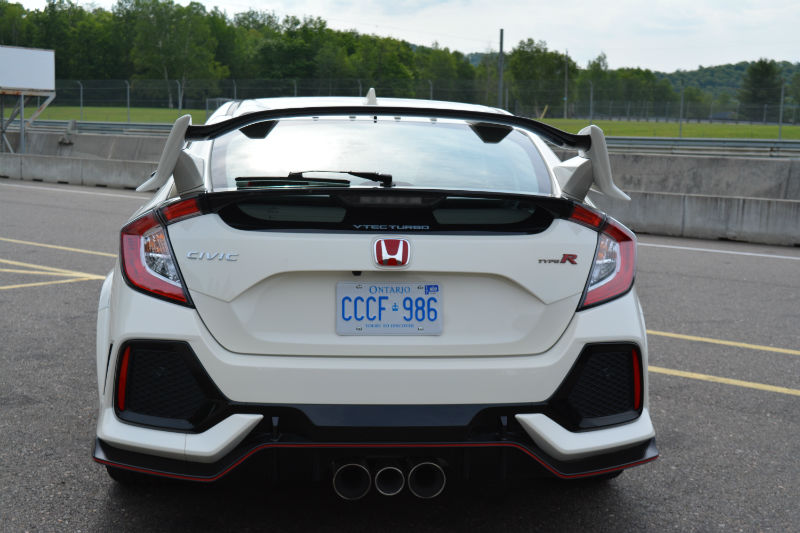
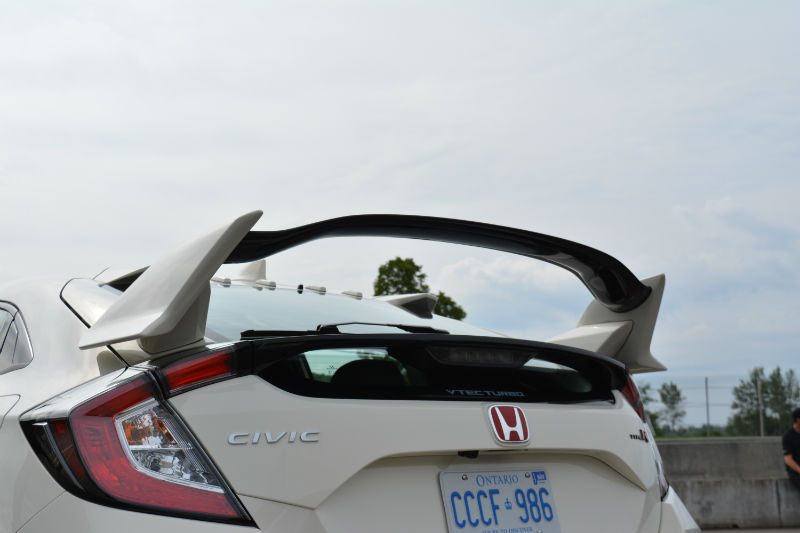
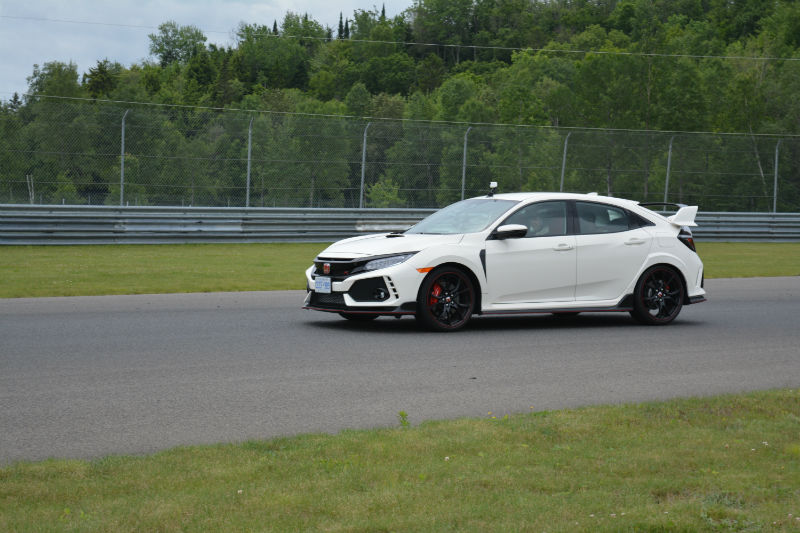
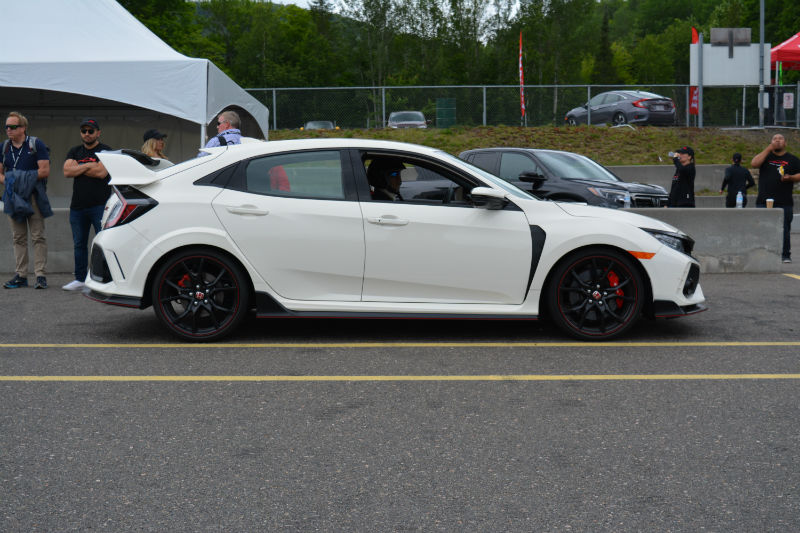
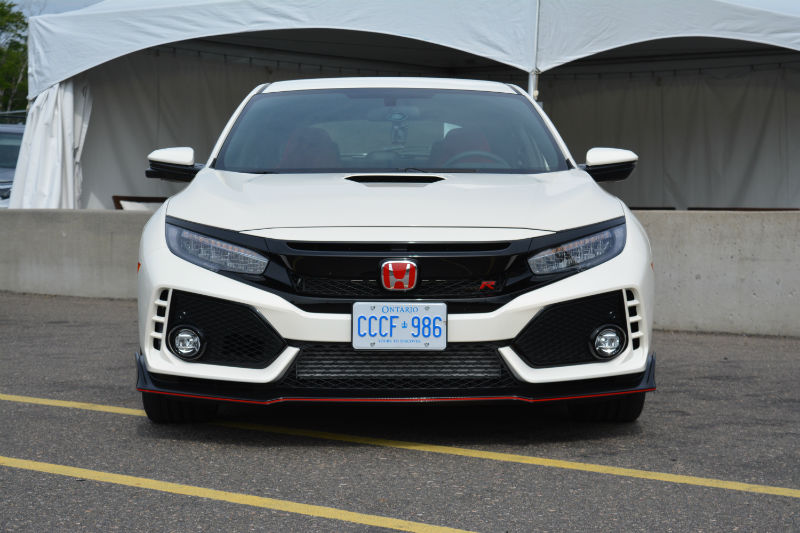
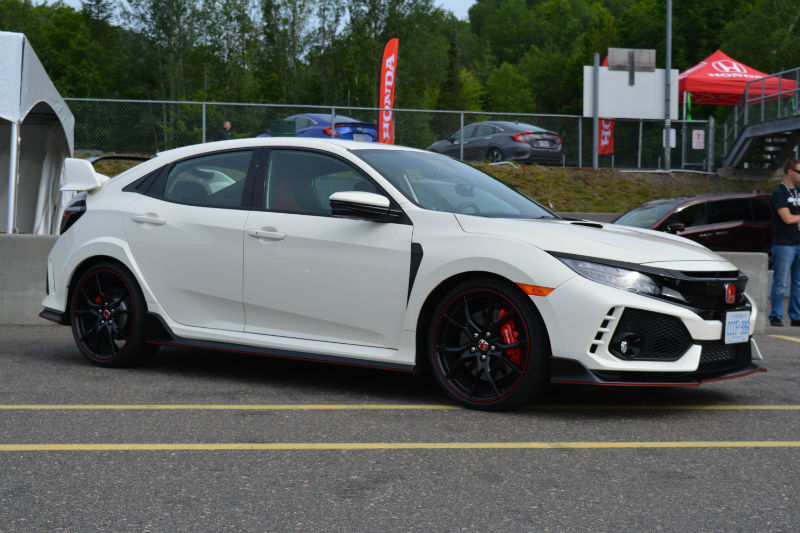
Let’s address the car’s outer shell design: everything you see is entirely 100% functional, as determined by a wind tunnel. That massive rear wing? Could not be smaller, or larger. The ginormous front air intakes? They provide engine bay and brake cooling. The hood scoop? No, this is not an homage to the STI, it actually serves to cool the engine bay once more as it gets really hot in there. The splitters, diffusers and vortex generator all serve a purpose, which is creating downforce to increase grip. Still wondering why the track? Driving up highway 15 in traffic would little to demonstrate their effectiveness.

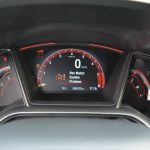
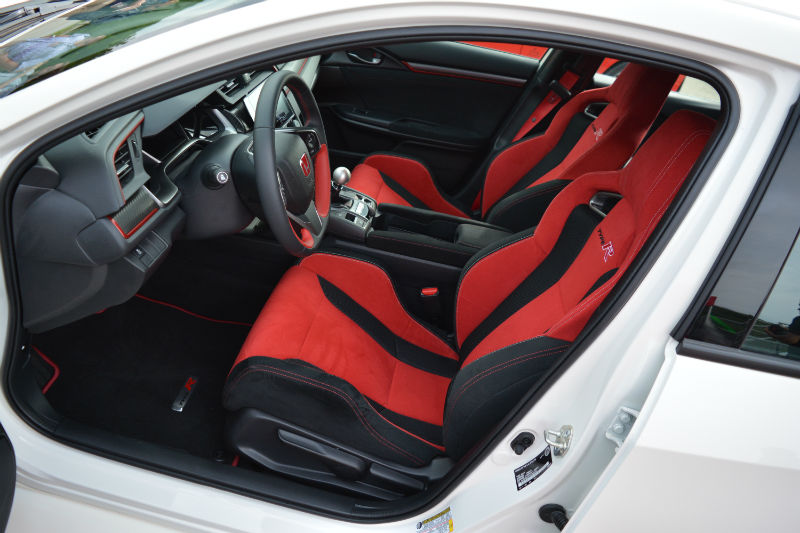
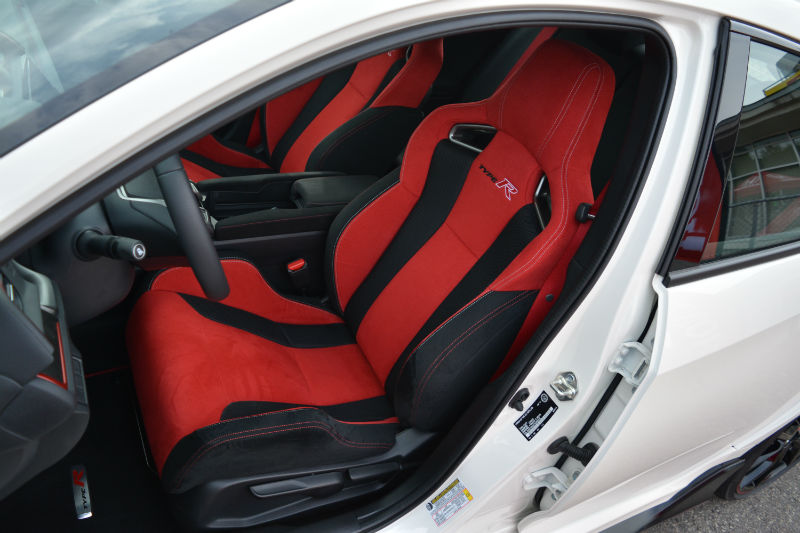
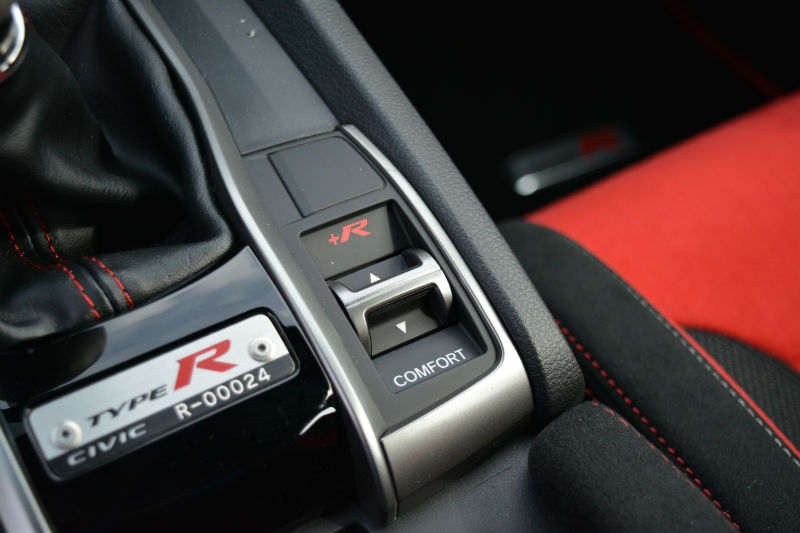
If at first I thought the Civic was just gaudy and over the top, I came to accept that this is not a show car, it’s a go car. While we’re on the topic of design, the interior fairly standard Civic fare with the notable exception of the house-conceived seats, the steering wheel and the drive mode switch.
The power, and putting it down
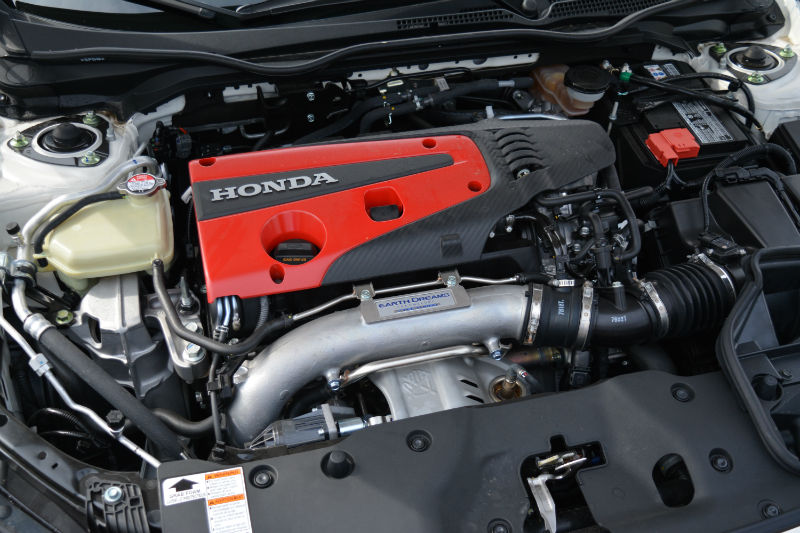
The red “H” that adorns the car at each end is not decorative; it is earned. The large single-scroll turbocharger bolted to the 2.0-liter 4-cylinder engine blows output up to 306 horsepower and 295 lb.-ft. of torque. With 23.2 PSI of boost, direct injection and exhaust valve VTEC technology, all the torque comes on tap from 2,500 rpm, and holds to 4,500. Horsepower lands in at 6,500 rpm, just before the redline.
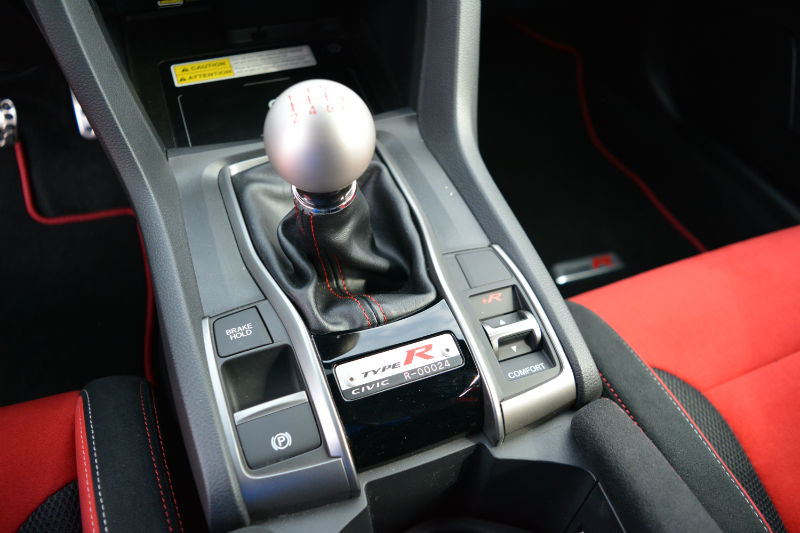
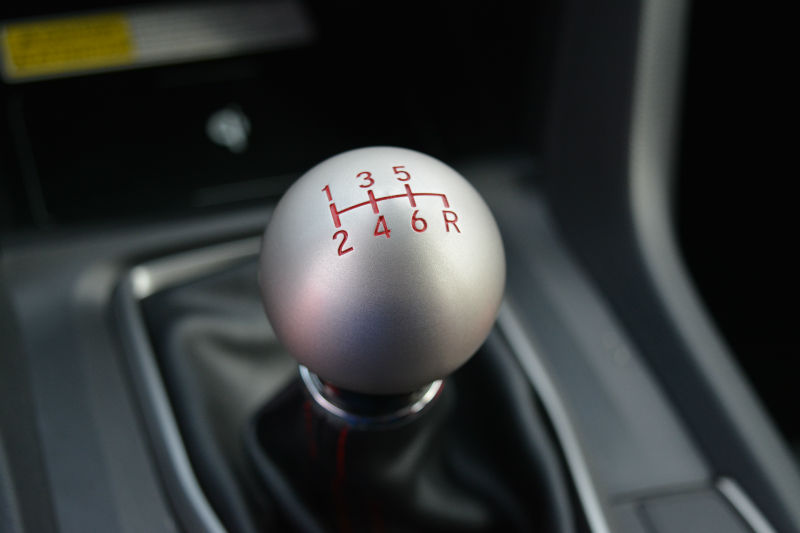
The only transmission available is a slick 6-speed manual complete with a helical limited slip differential up front, because the car is FWD. You wouldn’t know it as Honda’s engineered to the “bleep” out of the front suspension in order to supress torque steer. It features a dual-axis setup, which separates the strut from the steering action. Both are typically conjoined and are affected by what the other is going through.
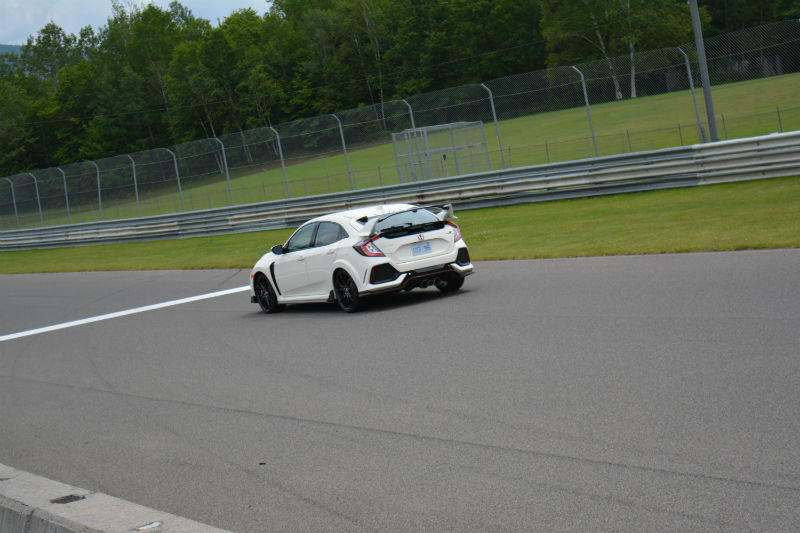
In the rear, the new Type R does away with the previous torsion beam setup and swaps in a multilink bonanza of goodness. Adaptive dampers all around complete the circle of grip. A dozen laps around the Mont Tremblant track demonstrated to me to experience the fact that that the new Civic Type R is the fastest, best handling FWD car I’ve ever driven.
Speed and brakes
To note, the Type R single-scroll turbo would normally create an instance of lag at lower rpm but Honda’s gone and used VTEC magic on the exhaust valves to counter said lag as much as possible. What I noticed on the track was likely due to electronics cutting throttle under hard stomping accelerations while getting into 4th gear on the back straight. By the time I’d reach turn 10 closing in on 200 km/h at the end of the straightaway, the Type R’s only semi-weakness would arise: needs more brakes.

What Honda did makes sense but in the grand scheme of things, I think they should have taken it up a notch. Only the front 4-pot callipers and vented cross-drilled discs get the race treatment while the rear settles for single-piston and solid discs. After only three good laps, a number of the cars had smokin’ brakes…
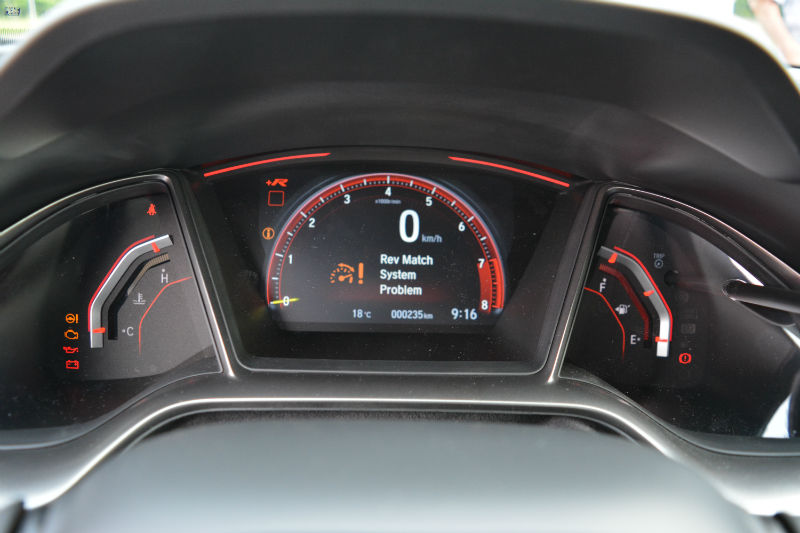
The engine provides an impressive amount of low-end torque. In order to make good use of it, short shifting or skipping up a gear did wonders for a quicker lap. Although it seemed to make little sense, especially as the 6M is a delight to handle (now features electronic rev-matching, meh…), it worked. The Civic includes three drive modes (Comfort, Sport (default), +R). The entire day was completed in +R with everything dialled to max so I’ve no idea what the cat is like in “comfort”. What also performed brilliantly was the quick 2.1-turn lock-to-lock variable EPS. Response is conveniently quick however never enough to upset the car’s balance.
And balance, it has. I’m still reeling from the track experience. The majority of the cars I’ve owned and tracked have been FWD. Heck, the last car I tracked at Tremblant was the Nissan Micra Cup car and the difference is staggering. The way the rear of the Civic kept up with the front, never dragging, or braking with grip instilled a buttload of confidence in my driving. That was until I got overzealous just past turn 2 and put an outside wheel on the vibrators. The car got good and sideways but I was easily able to reel it in. This would not have been the case in most “normal” cars.
The new Honda Civic Type R is an incredibly gifted machine. Should you wish to drag race, hold in the clutch, mash the throttle, the revs will rise and steady around 3,500 rpm, side step the clutch, repeat. And then there’s the whole thing about seats for everyone and a big boot…
The Serious Sport Compact Car Category has a new player, and it ain’t foolin’ about. If you’ve got $40k and a desire to go fast, you’re facing quite the daunting task. The Type R is available now.