LuxuryCarMagazine En Luxury Car Review and News
Today, after months of rumours and speculation, BMW officially revealed the 2016 7 Series, which marks the debut of the model’s sixth generation.

Taking a few notes from the brands “I” program, the 2016 7 Series will have a body crafted extensively in carbon fibre reinforced plastic (CFRP). It marks the first time a mass-produced car will feature a body crafted in CFRP, high-tensile steel and aluminum, the latter being used for the doors and trunklid. This provides a light weight design, as well as a rigid body structure. However, while it works for the i3 and i8, developing the entirety of the 7 Series body in CFRP would likely have been prohibitively expensive for a car set to be built en masse.
On the surface, the new car looks a lot closer to the current model than it does to anything from the “I” line-up; with a luxury sedan like this, you don’t to stray too far in the stylistic sense, which could upset the conservative tendencies of both the private owners and livery fleet operators.
It does get some styling cues more in-line with BMW’s high-selling 3- and 4 Series models, however; that means a slimmer kidney grille, low-profile headlamp lenses and the signature chrome stripping and fender garnish on the sides. All of this has been stretched to cover a body that is larger than before, which contributes to this being the largest sedan the marque has ever built, though it weighs 86 kilograms less than its predecessor.
For power, the first batch of 2016 7 Series models will get both V8 and V6 power, with the former being upgraded to have twin scroll tech for ’16. That means less turbo lag, more instantaneous torque and better fuel economy all at once. There has also been a minor horsepower jump, from 443 hp to 445. The V6 receives a bigger boost, from 315 hp to 320.
Perhaps the biggest news in the powertrain department is the addition of an eDrive plug-in hybrid model, due to be released after the V8 and V6, and likely to replace the current BMW ActiveHybrid 7. The 7 Series PHEV borrows tech from BMW I, in that it makes use of a 2.0-litre turbo gas motor paired with and electric drive unit. BMW is claiming an all-electric range of 37 kilometers.
Some new tech should also help non-PHEV models run more efficiently, as well, and it’s all linked to…the navigation system?
Basically, what the new car is able to do is tap into its navi system to see what kind of road and traffic lies ahead, and change the transmission mapping to match. This works even if you haven’t inputted a destination to your GPS, and it’s running in standby mode. The updated xDrive AWD system, meanwhile, allows for the decoupling of front- and rear axles while coasting.
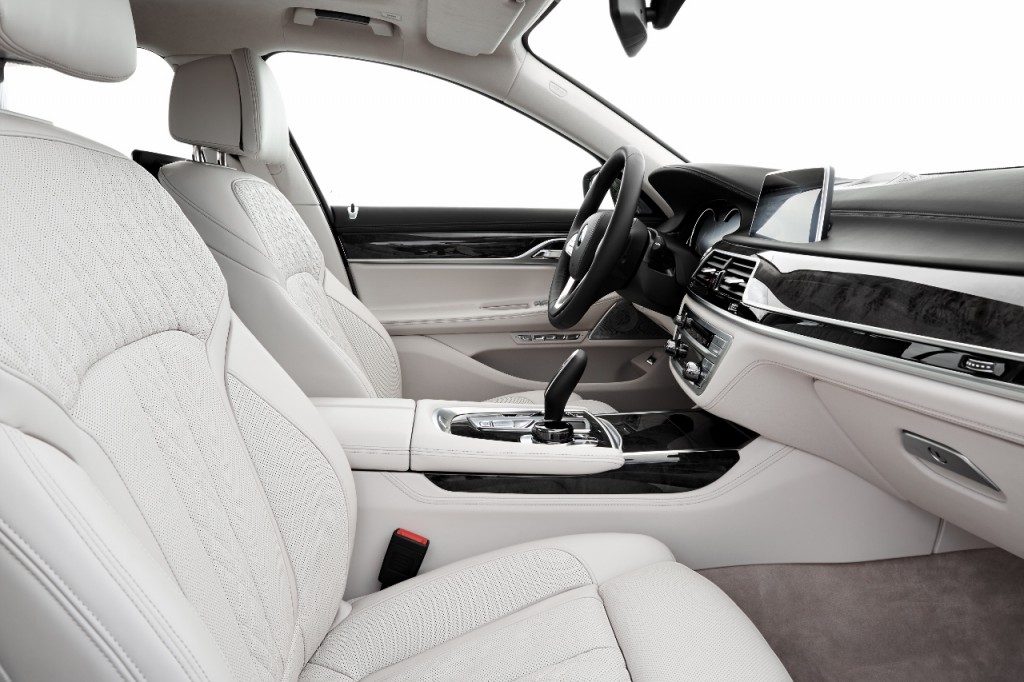
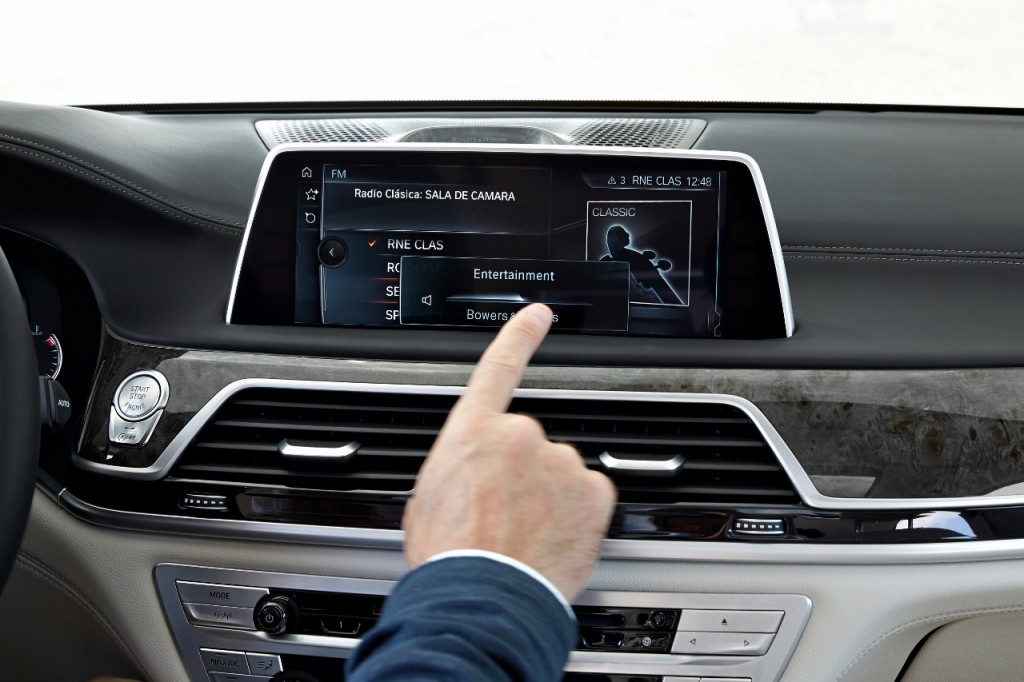
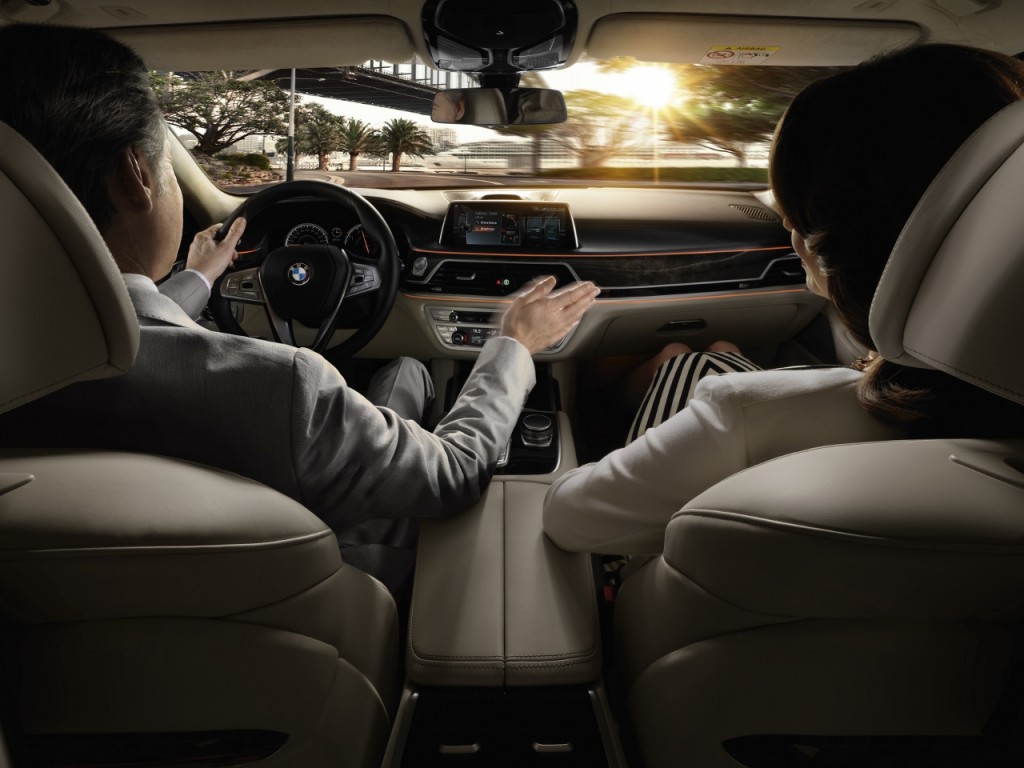
Inside, BMW is finally offering a touchscreen interface for their iDrive infotainment system. If you don’t want to reach over to the touchscreen, however, then an all-new hand gesture system recognizes certain movements to change volume, fan speed and phone calls.
Expect more information as the 2016 7 Series nears its debut later this summer.